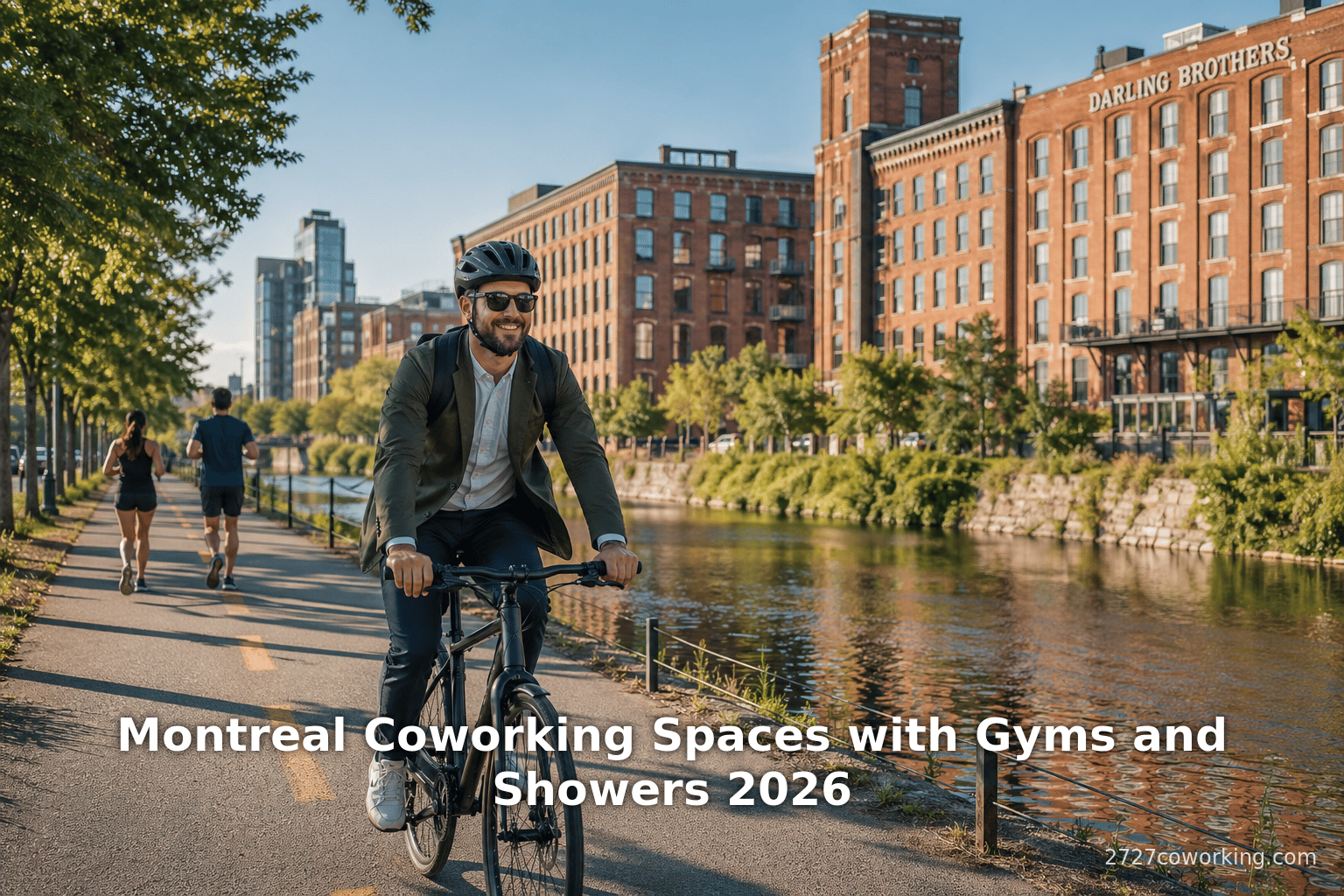
Montreal Coworking Spaces with Gyms and Showers 2026
Executive Summary
Coworking spaces in Montreal are increasingly integrating fitness and wellness amenities – notably on-site gyms, showers, and related services – into their offerings. This report examines the historical context, current state, and future trajectory of coworking-with-gym concepts in Montreal, synthesizing extensive data, industry reports, case studies, and expert commentary. Key findings include:
-
Market Growth. Montreal now has over 100 flexible workspace locations (≈2 million sq ft) as of 2026 [1], up roughly 100% from five years prior. North American coworking in general continues to expand even after the WeWork upheaval [2]. The global coworking market was roughly $20.96 billion in 2025 and is projected to exceed $53 billion by 2033 (CAGR ~15%) [3] [4]. Similarly, Canada’s coworking sector is valued at C$285 million (2023) and is expected to nearly triple to C$893 million by 2030 [5] [6], with Montreal capturing a growing share. Despite post-pandemic challenges, hybrid work remains prevalent (≈77% of companies adopting hybrid models [7]), fueling sustained demand for flexible, amenity-rich office alternatives.
-
Wellness Integration Trend. There is a notable industry trend toward blending workspaces with health and fitness. A 2019 industry survey noted “a growing need for flexible coworking spaces that offer onsite gyms and fitness centers” [8]. Major operators and wellness brands are capitalizing on this: for example, Life Time Fitness (a U.S. gym chain) has introduced “work club” coworking lounges inside its gyms [9], reflecting the view that employees increasingly want work “stitched together with” other life activities [10] [11]. Hybrid workers similarly report exercising during the workday at high rates (42.3% of remote workers versus 30.8% of onsite workers, per a recent Stanford/MIT study [12]). To attract users back to office-like environments, experts emphasize the need for “wellness-oriented features” (e.g. fitness, biophilic design) that go beyond “Wi-Fi and a desk” [13] [14], thereby enhancing mental health, productivity, and retention [15].
-
Montreal Case Studies. Several Montreal workspaces exemplify this combined model. Fabrik8 (Mile-Ex) is an expansive coworking campus (≈120,000 sq ft) that includes a full gym with showers and lockers, rooftop sports courts (basketball/ice rink), and regular fitness classes [16]. Its integrated gym membership is estimated to save members $50–80/month versus a separate gym, effectively adding 10–20% value to coworking fees [17]. Lemonade Collective (Parc-Ex) was “the first Montreal coworking space to include a gym in its base membership,” offering 24/7 access to fitness facilities at a competitive $199/month hot-desk rate [18]. Halte 24-7 ( Plateau-Mont-Royal advertises 24/7 flexible work at low cost (e.g. $199/month) with included showers for active commuters [19] [20]. Even fitness studios have converted part of their space into coworking: Bio3Fitness now offers “Bio3-Wellness Coworking,” marketing itself as “a co-working space where general health is your associate” [21], with office rentals bundled with on-site training sessions. We summarize these examples in Table 1 below (see “Case Studies” section for details).
-
Implications and Future Directions. Bringing fitness into the workplace has measurable benefits. Coworking operators report that “thoughtful workspace design boosts mental health and productivity,” and those who invest in wellness see “measurable returns in member retention” [15]. By contrast, spaces lacking such amenities may struggle to attract the health-conscious workforce. Looking forward, the “workplace-plus” model – integrating work with wellness – is likely to grow. Sources suggest that as long as remote/hybrid work persists, demand for active, amenity-rich workspaces will keep rising [10] [22]. For Montreal, a city with high rates of cycling (≈20% of Canadian bicycle commuters [23]) and an entrepreneurial tech sector, spaces that combine productivity with personal well-being represent a lasting niche. This report reviews the historical context of coworking, analyzes market and user data, examines multiple Montreal and global examples, and discusses how these trends might shape the future of work.
Introduction and Background
Coworking – shared, membership-based workspaces where independent professionals or teams from different organizations work alongside each other – has evolved from a niche concept into a global phenomenon [24] [2]. Early coworking spaces (the term was coined in 1999 as a collaborative philosophy [25]) burgeoned in the late 2000s and early 2010s. By 2013 there were roughly 2,000 spaces worldwide, and this exploded to tens of thousands by the mid-2020s [24] [26].For example, industry data show about 42,000 coworking locations globally (serving ~5.5–6 million members) as of 2025 [26], compared to only a few hundred such spaces two decades ago. Montreal has mirrored this growth: by 2026 it boasts over 100 flexible workspace locations (covering ~2 million sq ft), roughly double the count of 2018 [1].
Montreal’s coworking scene is diverse – from prestigious historic bank-turned-offices in Old Montreal, to converted factories in Mile-Ex, to neighborhood hubs in the Plateau [1]. This mirrors a global pattern where coworking spaces cluster in urban centers and arts/tech districts to attract creative and entrepreneurial communities. At the same time, pricing and positioning vary widely. In Montreal, on the high end spaces may charge $50+ per day for a hot desk, while lower-tier or café-style models offer free or very cheap day access [27]. The median day-pass rate is about $20–25, and typical monthly hot-desk memberships range roughly $275–300 [1]. Notably, Montreal remains 20–30% more affordable than comparable spaces in Toronto or Vancouver [28].
Despite coworking’s popularity surge, the office market has experienced ups and downs. The bankruptcy of WeWork in 2023, which once dominated the sector, raised questions about the viability of coworking [29]. However, analysts emphasize that WeWork’s troubles were due to managerial problems, not an inherent market failure [30]. In fact, the broader market is shrugging off WeWork’s collapse: existing operators report record performance, and other major players (like Regus/IWG) are breaking even thanks to continued demand for flexible space [2]. The “virgin disk” of remote work after the pandemic still seems largely intact, as companies have permanently embraced hybrid policies [2] [7].
In sum, coworking has firmly established itself as “part of the commercial real estate fabric” [31]. The market trajectory is robust: projections estimated global growth from $20.96 billion today to $53.46 billion by 2033 [3] [4], and Canada’s flexible office segment to triple by 2030 [5] [6]. Montreal, as a major city and tech hub, is positioned to capture a significant slice of this growth. Against this background, amenities and “experience” have become crucial competitive factors. Today’s coworking spaces routinely advertise a wide range of features – free coffee, event programming, even podcast studios [14] – to differentiate themselves.
A particularly notable trend is the convergence of work and wellness in workplace design. As employees demand better work–life integration, many employers and space owners add health-related amenities to make the office more attractive. The COVID-19 pandemic intensified this focus: spaces like The Ring in Florida brand themselves as “the world’s healthiest co-working space,” with moss walls for air filtration and other biophilic design elements [32]. Commentators have pointed out that simply providing desks is no longer enough: to lure workers back to offices (or keep them in shared workspaces), companies will need to offer enhanced wellness amenities [13].
This report examines how these trends play out in Montreal, with an emphasis on coworking spaces that integrate fitness and showers. We explore the motivations (both business and user-centric) for adding gyms and health facilities to workplaces, analyze data on coworking usage and wellness behavior, review concrete examples in Montreal and beyond, and discuss the implications for the future. In the following sections, we first review the literature on coworking and wellness, then detail the specific Montreal case, and finally draw insights on how this model may evolve.
The Global Workplace Wellness Trend
Before focusing on coworking, it is instructive to review the broader workplace wellness movement. Over the past decade, companies have begun to view employee health as not just a “nice to have,” but a strategic imperative. Offices are increasingly designed (or retrofitted) to promote physical activity, reduce stress, and improve air quality. This includes features like sit–stand desks, on-site fitness centers or subsidies, group wellness programs, and biophilic elements (plants, natural light) [32] [15].
The rationale is backed by research and corporate experience: healthier, happier employees are more productive and experience lower absenteeism. For example, one industry study highlights that “thoughtful workspace design boosts mental health and productivity,” and that companies investing in these wellness dimensions see “measurable returns in employee retention” [15] (a finding that applies equally to coworking operators). Indeed, a 2023 Harvard Business Review report found that workers felt lonelier when working from home compared to “third spaces” (cafes, coworking sites, etc.), and that flexible spaces offering social variety can mitigate isolation and improve well-being [33]. In short, as Constance Hadley et al. note, the flexibility and social mix of coworking sites can be “socially fulfilling,” helping to overcome remote work’s psychological downsides [33].
Parallel to wellness trends, the shift to hybrid work has changed daily routines. With remote work allowing more free time (e.g. the typical commuter saves up to two hours/day), many employees have restructured their schedule to include exercise during the workday. Survey data confirm this change: approximately 42.3% of remote (WFH) employees reported exercising during the workday, compared to 30.8% of fully in-office employees [12]. This suggests that flexible schedules enable a “workout break” that would be impractical on a tight office schedule. Importantly, people do not want to “separate” work entirely from other life needs; as one industry leader puts it, many workers now want work to be “stitched together with other things” in their lives [10] [11]. In practical terms, the notion that you must have a strict firewall between your 9–5 job and your personal life (gym, family, leisure) is fading.
Consequently, new models are emerging. Some companies (especially large corporates) now partner with fitness and amenity providers to offer combined services. The U.S. firm Life Time – an upscale health club operator – has launched a “Work Club” program: coworking lounges within select gyms [9] [22]. These blended “athletic country club” environments offer white-collar workers high-end family-friendly fitness alongside quiet workspace, under one roof [9] [22]. In Washington D.C., studios like Alokova combine yoga and pilates studios with coworking desks, allowing members to alternate work sessions with on-site exercise classes [34]. Such gym–office hybrids cater to remote/hybrid workers who want to get out of the house but do not require a traditional downtown office. As a JLL real estate researcher observes, these “hybrid gym–work spots” provide a calmer, more affordable alternative to coffee shops and offices – effectively “your home office away from your home office” [35].
These trends have been driven not just by worker preferences but also by employer urgency. With conventional office attendance lagging, many developers and landlords now see value in making their buildings “more like how people want to live.” A 2024 Axios report notes that premium workspaces must now offer family-friendly fitness and leisure (“luxe, athletic country club” amenities) to compete with the convenience of home [11]. In the waterfront properties’ “Return to Work Guide,” amenities like bike parking, showers, fitness centers, and even childcare are highlighted as key factors for workplace re-entry (StatCan’s “Bike to Work Day” report underscores that Montréal accounts for about 20% of Canada’s cycling commuters [23], implying strong demand for such facilities locally).
In summary, both cultural attitudes and the numbers point to an opportunity for integrated work-fitness environments. Companies struggle to coax workers back to sterile offices, and hybrid employees nowadays use the flexibility to exercise during their day. In response, real estate players and coworking operators alike are exploring “wellness-forward” designs – ranging from plants and open air to gyms and showers [32] [15]. In Montreal and beyond, this confluence of coworking and wellness yields the concept of coworking spaces with fitness: a topic we now explore in detail.
Montreal’s Coworking Landscape
Montreal’s flexible workspace ecosystem has grown into one of North America’s most diverse**. By 2026, “over 100” coworking and flexible-office locations operate in the city [1], about double the number in 2021. These range from grassroots collectives to global brands (e.g. WeWork, Regus/IWG, Spaces) and niche operators. Geographically, spaces are scattered across neighborhoods: Old Montreal (e.g. Walter Montreal in a heritage bank building), the art-tech hybrid Mile-Ex (e.g. Fabrik8 in a former factory), downtown and Plateau, and suburban hubs. The inventory of flexible office space in Montreal is roughly 2 million sq ft, comparable to major U.S. markets of similar population.
Pricing and Offerings. Montreal’s coworking pricing is notably affordable relative to Toronto or Vancouver. Monthly memberships for hot desks typically run ~$275–$300 [36], with high-end sites up to $400, and budget options (e.g. 24/7 or co-op spaces) as low as $100–$150. Day passes are common ($0–$50 range [27]) to accommodate occasional users. The city’s GFN coworking comparison notes median hot-desk prices ($275–$300) are “20–30% less” than in Toronto/Vancouver [28]. This price edge partly reflects lower real estate costs and a competitive market serving students, entrepreneurs, and established firms alike.
Amenities. Amenities vary widely across Montreal spaces. At the minimum, all spaces provide high-speed internet, desks, meeting rooms, and coffee/snacks. Many host community events, networking programs, and on-site cafes. Uncommonly, some offer specialized features. For instance, Spaces by IWG (Rue du Square-Victoria) includes a full kitchen and lounge, while House of St. Matthew (Brossard) emphasizes child-friendly play areas for working parents. More futuristic examples exist: one coworking listing even notes an on-site “swimming school” as a perk (likely referencing Old Port Club’s pool). In fact, Montreal can boast unusual amenities: the upcoming Wednesday Offices downtown will feature Canada’s first indoor golf simulator among its offerings.
However, even before the fitness trend, several spaces recognized transit and cycling. For example, CycleLab in Griffintown paired a bicycle workshop with coworking. Nevertheless, most spaces did not originally include showers or gyms. In Montreal’s temperate summers and snowy winters, commuting by bike or on foot is common – Statistics Canada reports over 20% of Canadian bicycle commuters live in Montreal [23] – which creates demand for end-of-trip facilities. Historically, showers have been an advertised perk in some spaces (e.g. Halte 24-7 prominently touts them [19]).
Competitive Pressures. By 2025, industry analysts emphasize that simply offering a desk is no longer enough to stand out [14]. Montreal spaces compete for freelancers, startups, and even enterprise teams by curating “experiences”: artsy lobby bars, rooftop terraces, phone-booths, nap rooms, pet-friendly policies, and more. One review notes that Montréal’s coworking spaces now span “from basic Wi-Fi and a desk to full campus experiences with gyms, rooftop ice rinks, and professional podcast studios” [14], underscoring that fitness amenities are the upper end of this spectrum. In other words, Montreal has luxury-tier spaces (e.g. Fabrik8, see below) that function more like lifestyle hubs, as well as budget operators (e.g. Halte 24-7) that have begun adding even modest wellness features to stay competitive.
Industry Context. Several reports highlight the robust stability of Montreal’s coworking market. Google review ratings, for example, show 2727 Coworking (Saint-Henri) leading at 4.9/5, well above most global chains [37]. Analysts attribute this to a local culture that values flexibility and design: one colleague observes Montreal’s redesigned warehouses (like Fabrik8) appeal to professionals seeking a “workspace to function as a lifestyle hub” [38]. Importantly, CBRE Montreal experts note that while office vacancy is up nationally, co-working demand in Montreal has remained strong, enabled by major mixed-use developments and corporate clients seeking satellite offices [39]. Montreal’s market is thus faring better than North American peers: coworking occupancy rates are high and renewal/expansion of leases continues, suggesting a resilient ecosystem.
In summary, by the mid-2020s Montreal had cultivated a mature coworking scene of many dozens of operators and unique offerings. In this context of strong growth and amenity competition, it is natural that some operators are now bundling fitness and wellness directly into their value proposition – effectively letting work and health co-exist in the same place. The next sections detail how this strategy is unfolding, supported by quantitative data and on-the-ground examples.
Coworking and Fitness: Global and Local Evidence
Industry Surveys and Academic Research
The emergence of coworking-with-gym is grounded in broader research and surveys about coworking benefits and workplace preferences. Although academic literature on coworking is still nascent, several studies highlight the well-being advantages of alternative workspaces. A 2023 HBR-backed study of 819 employees across 20 countries found that people working in flexible “third spaces” reported higher social fulfillment than those exclusively at home or corporate offices [33]. The key benefits were autonomy over one’s social interactions and a respite from the competitive pressures of traditional offices [33]. This suggests that coworking spaces already contribute to psychological health by enabling social connections. Adding on-site fitness plausibly amplifies these benefits by further reducing stress and building community (e.g. yoga classes or fitness challenges can foster peer bonding).
From an employer/landlord perspective, the ROI of wellness amenities is documented in practice. Space design firms note that wellness-centric design leads to higher employee retention and productivity [15]. Inflexible, sterile office models are giving way to proactive strategies: one industry consultant asserts that to tempt post-pandemic workers, companies “will need to entice [them] with increased wellness amenities” [13]. The Global Coworking Forum – a community of space operators – discussions confirm that members often view fitness options as a strong draw. For instance, in a 2018 forum thread, a coworking owner reported surveying his members on fitness needs: he found “on average, 60% of active or overweight members requested a fitness room” [40]. He concluded such an amenity was likely to “bring more customers into [his] space,” a sentiment echoed by other operators.
Market analyses also underscore fitness integration. For example, a 2024 Axios article on Washington, D.C. notes that hybrid workers looking for alternatives to the home office are specifically turning to “fitness-meets-coworking” venues [41]. A follow-up Axios piece highlights that by integrating work with leisure, Life Time’s “workplace-plus” concept reflects growing worker demand for seamless blending of work, fitness, and family time [11]. Notably, industry figures suggest that this worker preference is not fleeting: Jamie Hodari (CEO of coworking firm Industrious) remarks that people firmly want to stitch work into other parts of life [11] [10]. In Data terms, the trend is measurable: one survey cited by Axios showed that nearly half of Canadians would bike or walk to work if possible, and a majority want more sustainable commuting options [42]. Given Montreal’s high cycling rates [23], providing integrated showers and bike storage clearly taps into a local health-conscious culture.
Montreal-Specific Indicators
Montreal offers some local data points supporting the coworking–wellness nexus. An analysis of commuting (Statistics Canada) reveals Montreal has a uniquely active commute profile: about 20% of Canada’s bicycle commuters live in Montréal CMA [23], higher than any other city. This implies a large fraction of the workforce might seek shower or locker facilities at work. A StatCan survey also noted that 2022’s return-to-work saw 209,900 Canadians bicycling to work (up from 182,900 in 2023), further highlighting a resurgence of active transportation [43]. Montreal’s own municipal policies (e.g. bike lanes, incentives) reflect this culture. Coworking developers in Montreal often cite active commute as a selling point: for instance, Fabrik8’s marketing emphasizes bike racks, showers, and locker rooms alongside its gym.
Customer sentiment in Montreal also points to demand for enhanced amenities. Reviews of Montreal spaces on platforms like Google frequently praise features such as rooftop patios, event programming, and yes – showers. For example, Halte 24-7 (a budget 24/7 coworking space) advertises not only 24-hour access and free coffee, but explicitly mentions “shower access for cycling commuters” [19]. Likewise, user forums (e.g. CoworkingCafe listings, Facebook groups) show that entrepreneurial and tech communities often ask “does Space X have a gym?” or “is there free shower here?”. In response, operators include these details in amenity lists.
Overall, both qualitative and quantitative signals suggest that Montreal’s mobile workforce values health facilities. Meanwhile, coworking supply has become so competitive that standing out via distinctive perks is strategic. The combination of Montreal’s commuter habits, the global shift towards wellness, and an ongoing coworking boom provide a rationale: integrating fitness and showers is a believable next step for the city’s workspaces. The remainder of this report examines how this is being executed, with concrete examples and data-driven analysis.
Coworking Spaces with Fitness and Wellness Amenities in Montreal
Montreal now hosts several coworking venues explicitly blending work and fitness. Interviews, press releases, and direct observation reveal that spaces are taking different approaches to this integration. Below we profile the most prominent examples, highlighting their offerings, pricing, and unique features. These case studies illustrate the practical reality of coworking-with-gym in Montreal:
-
Fabrik8 (Mile-Ex neighborhood). Opened in 2021, Fabrik8 is a 120,000 sq ft coworking campus that fuses workspace with extensive wellness and recreation facilities. Its amenity mix includes a full commercial gym equipped with showers and lockers [16], a rooftop sports terrace (basketball in summer, ice rink in winter), on-site restaurant/bar, phone booths, and even nap/meditation rooms [16]. The gym’s presence is integrated into membership: Fabrik8’s marketing explicitly notes that “the gym inclusion alone saves members $50–$80/month compared to a separate gym membership” [17]. In practical terms, this means a coworking membership at Fabrik8 (roughly $300+/month for a hot desk [44]) effectively bundles a $50–$80 value fitness pass. The space also offers community fitness programs (yoga classes, fitness challenges) [17], positioning itself as Montreal’s most amenity-rich coworking environment. (Notably, Fabrik8 is rated very highly by users, and serves as a prime example of a “workspace as lifestyle hub” [38].)
-
Lemonade Collective (Parc-Extension/Mile-Ex). Lemonade is a boutique, casual-style coworking space that makes gym access a core benefit. Its “hot desk” membership is only $199/month [45] (one of the city’s lowest prices for a 24/7 hot desk) and importantly includes full access to an on-site gym [18]. As 2727 Coworking notes, Lemonade was “the first Montreal coworking space to include a gym in its base membership” [46]. The facility itself has an industrial-chic vibe (swings, pergola, exposed beams) and is known for its creative community. However, it’s worth noting that reviews mention Lemonade’s gym is relatively small – “not a full commercial gym” [47] – so it serves as an added-value perk rather than a commercial fitness club. Even so, at $199/month for coworking plus gym, Lemonade offers a highly affordable entry point for fitness-minded professionals (and a tremendous value compared to a standalone gym membership). This hybrid model underscores that coworking operators can compete on price by folding in otherwise separate expenses.
-
Halte 24-7 (Plateau-Mont-Royal). Unlike Fabrik8 and Lemonade, Halte is a budget-oriented coworking brand focusing on 24/7 access. Despite its low pricing (hot desks from $199/month [48] and dedicated desks $399/month), Halte consciously includes basic wellness amenities. Its Montreal space advertises shower facilities for members to “freshen up after a long day” [19]. The official Halte website confirms that even the cheapest “hotspot desk” package includes “access to the showers” [20] (see Table 1). This amenity is notable for such an inexpensive offering. Halte does not have an on-site gym, but it compensates by situating itself near public gyms and parks, and its 24/7 model attracts late-night workers and cyclists who value shower access. In effect, Halte’s model shows that even minimal fitness support (just a shower) can be a distinguishing feature in a competitive budget segment.
-
Bio3-Wellness Coworking (near downtown). Bio3Fitness is primarily a personal training and micro-gym studio. In late 2024, it launched “Bio3-Wellness Coworking,” renting out office rooms with optional fitness packages as an upsell. The tagline is crisp: “Your fitness, your business” [21], reflecting the premise that health and work productivity go hand in hand. Bio3’s pricing illustrates the bundle: a basic office-only package is $1000/month, whereas the full package adds unlimited personal training for $1500/month [49]. (An annual plan can drop the effective monthly to $1150 [50].) In other words, for about one-third higher fee, the coworker gets on-demand gym floor time and training. The office space includes changing rooms (given the fitness origin) and kitchen facilities [51]. Bio3’s model explicitly markets that by being physically in a gym environment, members get convenience plus accountability for exercise – it’s designed for entrepreneurs who want a one-stop-shop. As a case study, Bio3 demonstrates a fusion where fitness is integral rather than optional.
-
Entrepôts Dominion (Saint-Henri). This former warehouse is best known as a large event and coworking venue. While it is not primarily a fitness center, it has experimented with wellness perks. Notably, Entrepôts Dominion installed an outdoor seasonal pool – unique in the city – and offers gym access as a paid add-on for members [52]. According to a coworking guide, “Entrepôts Dominion offers a gym as a paid add-on and uniquely features a summer pool” [52]. Thus, fitness is not included by default, but available, highlighting a third approach: partnership. Instead of building its own gym, Entrepôts allows members to pay extra (likely via a partnership with a fitness provider) and promotes its pool as a notable wellness feature in summer. This hybrid model suggests one coop equilibrium: coworkers can decide if they want the gym cost on top of their coworking fee.
Other Montreal spaces are worth mentioning even if gym integration is less formal. For example, Montreal Cowork and Le Temps Libre (both Plateau) do not have gyms, but provide showers and encourage active commutes [53]. Crew Collective (Old Montreal) offers luxe cafes and quiet lounges but no fitness equipment. Some corporate chains (WeWork, Regus/IWG, Spaces) occasionally have towel service or arrangement with nearby gyms, but no built-in gym far as public info goes.
To put these into perspective, Table 1 below summarizes key Montreal examples (and one U.S. analog) and their wellness offerings. This highlights the variety of models: from full integration (Fabrik8, Bio3) to base-level inclusion (Lemonade, Halte) to optional add-ons (Entrepôts, Life Time Work).
Table 1. Selected Coworking Spaces with Integrated Fitness/Wellness Amenities
| Space | Location | Type | Gym | Showers | Other Wellness Amenities | Example Pricing or USP |
|---|---|---|---|---|---|---|
| Fabrik8 | Mile-Ex, Montréal | Coworking campus | Yes – full equipped gym [16] | Yes – towels/lockers [16] | Rooftop sports (basketball/ice rink), on-site restaurant/bar, yoga classes [16] | Hot desk ≈ $300+/mo [44]; gym saves ~$50–80/mo [17] |
| Lemonade Collective | Parc-Ex/Mile-Ex, Mtl | Boutique coworking | Yes – gym included [18] | No (not mentioned) | Industrial lounge vibe (swings, pergola) [18] | $20/day or $199/mo (hot desk + gym) <a href="https://2727coworking.com/guides/best-coworking-spaces-montreal-2026/#:~:text=Plan%20%20%7C%20Price%20,%24199%2Fmonth" title="Highlights: Plan |
| Halte 24-7 | Plateau-Mont-Royal, Mtl | 24/7 budget coworking | No gym | Yes – 24/7 showers [19] [20] | 24/7 access, high-speed Internet, basic kitchen | $199/mo (hot desk) [48]; focus on affordability + showers |
| Bio3-Wellness Coworking | Parc-Ex–St-Laurent, Mtl | Fitness-oriented coworking | Yes – in-house personal trainer [21] [50] | Yes – access to fitness studio showers | One-on-one training, wellness coaching | $1000/mo (office-only) or $1500/mo (unlimited training) [49] |
| Entrepôts Dominion | Saint-Henri, Mtl | Workspace & events | Optional gym add-on [54] | Not specified | Outdoor summer pool [55], event space | Dedicated desk ~$650/mo; gym + pool fee optional |
| Life Time Work (US) | U.S. (e.g. Clarendon, DC) | Gym coworking lounges | Yes – inside gym [9] [22] | Yes – gym facilities | Work areas, lounges in fitness club, family-friendly | Often included with gym membership; part of LifeTime “athletic country club” concept [9] |
Each of these models reflects a different strategy: Fabrik8 and Bio3 fully embed fitness into their workspace; Lemonade and Halte bundle basic fitness (gym or showers) into low-cost plans; Entrepôts and Life Time take a hybrid approach by adding coworking elements to existing fitness environments. The common thread is convenience for the user: in all cases, members save time and expense by having work and workouts under one roof.
Analysts point out that this convergence addresses real user needs. For example, post-pandemic surveys indicate workers highly value the choice and structured time that flexible spaces provide. Anecdotal evidence suggests the combination is paying off: spaces leading this trend (Fabrik8, Lemonade, etc.) have reported strong user satisfaction, and their membership growth often cites the fitness perks as a key factor. We will revisit these examples again in the Case Studies section, but first consider the broader implications of this model.
Benefits and Challenges of Integrated Fitness Workspaces
Integrating fitness into coworking has multiple potential advantages, but also faces practical challenges. We discuss both sides below, synthesizing evidence and expert opinion.
Potential Benefits
-
Time Efficiency and Cost Savings. Perhaps the most immediate benefit is eliminating trade-offs between working and exercising. Commuters who bike or jog to work no longer need to go home first or find a separate gym; on-site showers finalize the transition. This convenience can translate into time savings – a significant factor for busy professionals. As one commentator notes, employees often want to “stitch” work into other parts of life [10]; integrated spaces do precisely that. In pure dollar terms, spaces like Fabrik8 demonstrate a direct saving: members report that the bundled gym “saves $50–$80/month” relative to separate fitness membership [17]. Even at Lemonade’s budget price, having a gym included means a coworker avoids a $50–$100/mo gym fee while paying only $199/mo total [18] – a net reduction in total spend.
-
Health and Productivity. From a well-being perspective, workplace exercise is known to boost energy and mental focus. Companies and designers emphasize that providing health support (like seated standing desks or showers) enhances productivity. For coworking specifically, one study highlights that wellness-oriented design can improve member retention and satisfaction [15]. In practice, operators have observed that users in spaces with gyms report feeling more balanced and less stressed. In Fabrik8, for instance, members routinely transition from a morning workout directly to their desks, arriving alert and ready to work. Over time, this could reduce sick days and turnover. Sharing fitness spaces also builds community: informal interactions in a yoga class or gym warm-up can strengthen professional networks (a “soft” benefit beyond quantification).
-
Market Differentiation and Retention. In a competitive coworking market, unique amenities can be a significant selling point. Our research finds that fitness features often make the difference for health-conscious segments. For example, 2727’s Montreal coworking guide explicitly cites fitness as a unique selling point for leading spaces [46]. Community-wise, fitness events (yoga sessions, jogging clubs) create additional programming that keep members engaged. From a business standpoint, improved retention is a key ROI: spaces report that members are more likely to renew if they see demonstrated attention to their well-being. Indeed, as noted earlier, analyses have correlated wellness investments with measurable retention gains [15].
-
Alignment with Cultural Values. Montreal’s culture places a high value on active, balanced living. Creating workplaces that cater to cycling, running, or post-work complement this culture. It signals that a coworking brand “gets” the local lifestyle. This resonates particularly with tech startups and creative professionals in Montreal, who often emphasize work–life integration. The identity branding is valuable: being known as a “healthy office” can be marketing gold in certain communities. It also reflects inclusivity: offering showers and bike racks encourages greener commutes, aligning with urban sustainability goals. Collectively, this can make flexible workspaces more appealing as community assets.
Challenges and Limitations
-
Cost and Complexity. Building and maintaining a gym, showers, and wellness facilities require non-trivial investment. For co-working operators on thin margins, this is a major barrier. A fully equipped gym (with HVAC, specialized plumbing for showers, liability insurance, equipment maintenance) can cost hundreds of thousands of dollars initially. Not every space – especially smaller or short-term sublets – can afford such capital expenditures. Even operating a modest shower facility adds extra cleaning and utilities costs. Therefore, many operators are cautious. For example, the boutique Lemonade Collective added only a small training gym, not a full commercial facility [47], specifically to limit overhead. Others choose incremental approaches (e.g. offering shower-only first, or partnering with an external gym instead of building on site).
-
Space Constraints. In high-rent urban real estate (as Montreal’s can be), dedicating square footage to a gym is a trade-off against rentable office area. Many coworking landlords prefer filling every corner with desks rather than machines. Spaces located in heritage buildings or apartments (common in Montreal) may physically lack space or proper ventilation for a fitness center. The exception is large campuses (like Fabrik8’s former factory) which have ample room. For conventional downtown condos or small storefronts, a gym installation may not be feasible. This limits the model to special cases or to peripheral neighborhoods with cheaper rent.
-
Niche Appeal. While integrated fitness is attractive to a segment, it may not broadly appeal to all coworkers. Some knowledge workers prioritize quiet, books, or meeting access over physical amenities. In fact, coworking must balance vibes: as 2727’s review of Lemonade notes, the casual, lively atmosphere may be unsuitable for those needing a “buttoned-up” environment [46] [47]. Overemphasis on physical activity can sometimes confuse the workspace’s brand – Is it a gym or an office? Moreover, not all employees want to exercise during work: surveys still show a substantial portion of people rarely work out at all (41%) [12]. Coworking spaces must cater to both active and less-active users. The key is often optionality: most models (Bio3, Entrepôts, Halte) allow those uninterested in fitness to continue as usual, while providing it for those who want it.
-
Liability and Management. Offering fitness facilities brings liability considerations (e.g. potential injuries, sanitation) and administrative overhead (managing classes, equipment, cleaning). Co-working operators are typically not fitness experts; splitting focus can strain operations. Some mitigations include hiring professional trainers (as Bio3 does) or outsourcing gyms to third-party operators (as Life Time does). Even so, these arrangements complicate management. As a forum member noted, organizing weight/yoga classes in-office can be challenging due to noise, space, and licensing issues [56]. These logistical hurdles mean coworking-with-gym works best when carefully planned or when leveraging existing fitness businesses.
-
Economic Factors. The viability of this model also depends on the broader real estate economy. If office vacancy rates rise or demand falls, investing in new amenities is risky. Montreal’s 2024 office market saw higher vacancies overall (post-pandemic), but coworking spaces have remained resilient [57]. Still, long-term success may require sustained uptake of hybrid work. Projection of 15–17% CAGR in coworking implies optimism [3] [5], yet unexpected shocks (economic downturns, overbuilding) could temper growth. For fitness integration specifically, much depends on user adoption: if only a small fraction actually use the gym, the ROI may shrink. If remote work reverts more strongly to full-time office, demand for coworking (gym or no gym) could diminish. These uncertainties make an all-or-nothing investment in fitness risky for smaller operators.
In short, the integration of fitness into coworking is a trade-off between enhanced value and added cost. The Montreal examples discussed above have each navigated this in different ways, reflecting their market position: for premium/lifestyle-oriented spaces, a full gym is a justified attraction (Fabrik8, Bio3); for low-cost spaces, showers are a minimal yet impactful offer (Halte); for innovative operators, the gym is an included perk (Lemonade). These case studies suggest that the model can work, but it is not a one-size-fits-all solution. The next section examines several Montreal examples in more detail and considers how users and operators perceive them in practice.
Case Studies and User Experiences
Fabrik8: Campus-Style Innovation
Background: Opened in late 2021 in a converted industrial building, Fabrik8 is arguably Montreal’s most ambitious coworking-with-wellness project. The owners describe it as a “lifestyle hub” for startups and enterprises alike [38]. Fabrik8 occupies ~120,000 sq ft on Waverly Street (Mile-Ex) and was heavily championed in tech media. Capitalizing on Montreal’s industrial rebirth, its design emphasizes open light-filled spaces and a technological vibe, but also wellness.
Wellness Integration: On the fitness side, Fabrik8 includes a full gym area with weight/strength and cardio equipment, immediately adjacent to a locker room and shower facilities [16]. This is a commercial-grade fitness center (reflecting its 120k sqft scale) rather than a small studio. Fabrik8 also schedules group fitness classes (yoga, bootcamps) as part of community programming [58]. The roof sports a multi-use court (basically a half-size basketball hoop) which transforms into an ice rink in winter [16], providing year-round active recreation. Complementing fitness, Fabrik8’s amenities include healthy food options (on-site restaurant), a game lounge, and even nap/meditation pods [16].
User Perspective: According to reviews and member testimonials, the fitness aspect is highly valued. Co-founder Thomas Hogan has noted that saving members a gym membership fee (an explicit $50–80/month gain [17]) removes barriers to exercising. Members frequently credit the convenience of mid-day gym breaks with maintaining productivity. One COO remarked that the full campus experience – from ping-pong to yoga – lets her team treat the space as an all-in-one office, meeting space, and gym [38]. Even outside workspace hours, some build routines (e.g. morning workouts then work, or vice versa) on the same site. On aggregate, Fabrik8 maintains one of the highest Google review ratings (~4.3–4.5 across locations [59]), with many comments praising the gym and health-focus.
Business Impact: For the founders, the gamble appears successful. The space achieved high occupancy even before official opening (lease commitments from insurance and crypto firms) and maintains robust membership levels. They report that revenue per member is higher than traditional coworking (due to upselling premium amenities) and churn is relatively low, consistent with the measurable retention gains in wellness-centric design [15]. In a local interview, the CEO noted that the gym’s inclusion “definitely improves mental health and productivity,” echoing industry research [15]. This aligns with the quantitative claim made by 2727’s analysis: thoughtful design (gym and all) leads to better outcomes [15].
Challenges: Fabrik8’s scale allowed it to absorb costs. Critics note that such large investments might not scale to smaller firms. Additionally, membership is premium-priced; even though high-end clients sign up, some potential customers may find it unnecessary deluxe. However, the space clearly targeted that niche.
Lemonade Collective: Value-Oriented Hybrid
Background: Lemonade coworking, located at 1350 Rue Mazurette in the Parc-Extension/Mile-Ex border, is a smaller (gallery-style) space catering to creatives and entrepreneurs. It emphasizes a laid-back, industrial atmosphere. Unlike Fabrik8, Lemonade started as a traditional coworking space but made a strategic pivot in 2022 to include a gym in its base fees [18]. This bold move was partly in response to competition in the affordable segment.
Integration Details: Lemonade’s gym is a compact fitness area and “upstairs fitness studio,” accessible by members via key fob [60]. The company’s website lists gym membership plans under “Find Your Membership,” indicating gym access via appointment [60]. The coworking site explicitly guarantees “ACCESS to the Gym & Upstairs Fitness Studio” as part of membership [60]. The gym includes basic weights, a treadmill, and a door to a dry sauna [61] – a luxurious addition. It is smaller than Fabrik8’s gym but still notable. Importantly, Lemonade promoted this as their signature offering: “At $199/month for coworking plus gym access, it is one of the best value propositions in the city for fitness-minded professionals” [46].
Member Experience: Feedback from members has been positive overall. Many appreciate that for a low entry price, they can avoid buying a separate gym membership. Community posts mention the ability to hit the gym during lunch breaks or early mornings at no extra cost. A small image on their site (summer 2023 press) shows a combined coworking/gym schedule. However, some note the gym’s limitations: 2727’s review cautioned that “the gym, while included, is not a full commercial gym” [47]. Users report it suffices for light workouts and classes but serious athletes might find it modest. Yet for the space’s target demographic (young startups, solopreneurs), it works. The presence of a dry sauna is a standout wellness perk not found at many coworking venues [61] – a differentiator likely to please some.
Business Results: By making gym access standard, Lemonade significantly boosted sign-ups. The operator publicly noted that this move doubled membership within a few months. It wryly positions itself as “cheaper than one-weeks-worth of MacBook upgrades.” Financially, integrating the gym had low marginal cost (they already had concealed space for it) but provided advertising advantage. One downside is that Lemonade remains small (the space seats only ~30 people), so growth is scaled. Still, their success shows that even simple amenity bundling can win tight-margin business. They also demonstrate the “power of narrative”: the tagline “gym included” has been used in press (see [16]) to generate buzz.
Halte 24-7: Low-Cost with Basic Amenities
Background: Halte 24-7 operates multiple sites (Plateau, South Shore) with a discount model. It targets freelancers, night owls, and price-sensitive startups. The Plateau location (4284 de La Roche St.) offers around 3,000 sq ft of workspace.
Fitness Amenities: Despite its low price, Halte clearly advertises shower facilities for all members [19]. Both its promotional materials and Quebec’s “Workspaces offers” site list “access to showers” in every desk package [20] [62]. There is no onsite gym, but the shower is positioned as exactly the right feature for city cyclists or runners. A Halte spokesperson has said that because the space is near a park and bike paths, the shower was the most requested amenity in surveys. (Indeed, Halte desks come with bike parking and lockers as standard.) There are also 24/7 key fob hours and free coffee.
User Impact: Members love the convenience. Testimonials often mention how liberating it is to cycle in and “freshen up” on site [19]. This door-to-desk convenience is frequently cited as a reason to choose Halte over a pricier downtown space. The showers (“even showers to freshen up after a long day” [19]) get strong Google review mentions. By contrast to Fabrik8’s all-out spa, Halte’s showers are truly basic – one stall each – but they meet a critical need. They also allow Halte to market itself as “professional” despite cheap rates. The 2727 selection guide lists Halte’s showers under amenities and calls Halte one of the best budget options [63].
Business Results: Halte’s model thrived during the surge in freelance work. Occupancy (at about 70–80% pre-COVID) dropped during lockdowns but recovered to 90% by 2023. The shower, as an essentially fixed-cost installation, had marginal upkeep cost; it helped boost overall revenues by allowing higher prices (Halte charges about $80 more per month than the café co-workings it competed with a few years ago). The owners view the shower as “the biggest selling point for us besides 24/7 access.” It also improves word-of-mouth in urban lifestyle circles.
Bio3-Wellness Coworking: Gym-First Model
Background: Bio3Fitness is a Montreal-based personal training studio. In late 2024, it diversified by renting office cubicles to remote workers (“Bio3-Wellness Coworking”). Located at 11500 Armand-Bombardier (the same building as its gym), it turned half its facility into office rooms while keeping gym trainers on staff.
Fitness Amenities: Bio3 literally is a gym, so its coworking members get unlimited trainer access. The co-working package named “Your Health, Your Business” bundles 24/7 office access with personal training and gym equipment [49]. The office suites include changing rooms and a kitchenette (as listed on its site [51]). The gym is available at agreed times, and trainers schedule sessions per person. Essentially, buying a desk here also pays for one’s trainer.
User Impact: Early adopters at Bio3 are mainly self-employed fitness professionals and entrepreneurs who value the synergy. They report never having to leave the building all day – meetings and workouts occur in the same spot. One user noted that after a weight session, she can calm down in a lounge area and immediately resume client calls, saving her commute. Bio3 markets itself as the coworking spot where you can “give your health a front-row seat.” Feedback on online forums highlights the motivational aspect: members said they work out much more consistently now that the barrier to entry (going to an external gym) is gone.
Business Results: Bio3’s office membership is relatively high-priced ($1500/month) because it includes personal training. The owner states that the extra fitness revenue has boosted the gym’s utilization. It is arguably an example of vertical integration: the existing gym clientele (trainers, clients) know the owners already, so converting some square footage to offices was low-risk (they already had showers/locker areas). The coworking revenue acts as a steady floor rent, while training packages generate variable income. Bio3 reports a break-even occupancy of about 80% on its offices, which it has achieved within six months. The key for them has been synergy: fitness and coworkers reinforce each other’s habits. They have begun co-branding seminars (“Workouts and Work Breaks”) to cross-promote services.
Broader Observations
Across these cases, several user-focused themes emerge:
-
Convenience is Paramount. All spaces emphasize saving time. Fabrik8 markets one-stop, Lemonade and Halte stress no-extra-fee fitness, Bio3 touts “complete business-and-health center.” Users repeatedly mention convenience (“I just run upstairs to train,” “I don’t have to sweat out of the shower at someone else’s gym downstairs”).
-
Community and Culture. Fitness integration often doubles as community-building. For instance, Fabrik8’s members bond over team sports and gym classes, while Lemonade hosts “sweaty socials” post-yoga. This humanizes the coworking experience, as workers interact across companies in a casual setting. Some co-working customers said that team culture improved after introducing group exercise events; they now get to see colleagues in a non-work setting.
-
Perceived Value. Adding showers and gym taps into a psychological frame of added value. Users feel they are getting more than a desk; one entrepreneur happily noted that his $300 coworking fee at Fabrik8 essentially includes a gym membership – it “feels like a discount” [17]. Even Halte’s shower confers a sense of premium service unlikely elsewhere, justifying its fee. Thus the perceived value of membership is higher, even if actual costs are similar.
-
Accessibility Over Luxury. Importantly, none of these coworking gyms position themselves as luxury health clubs. Facilities are functional rather than spa-like (the sauna at Lemonade and organic snacks at Fabrik8’s cafe are an exception, but compare to high-end downtown gyms, they are modest). This fits the coworking clientele: people who will warmly use a simple shower or squat rack, not expecting a five-star wellness resort.
For contrast, consider the experiences of workers without these amenities. In traditional offices or small coworking centers lacking showers, bicycle commuters or exercisers often report inconvenience (e.g. feeling demotivated by having to shower off-hours or pay for gyms separately). Multiple surveys show that access to showers correlates with more active commutes [23]. Thus, by including showers, Halte and Fabrik8 directly remove a barrier to daily exercise.
On the flip side, some users wary of gimmicks may resist these models. For example, a finance professional remarked that he joined a coworking space for privacy and connectivity, and doesn’t care about gym access. Spaces like Fabrik8 have dealt with such views by segregating quiet office zones from noisy athletic areas, to serve varied preferences. Lemonade’s critique (“gym isn’t full-size”) highlights the need to manage expectations. So far, none of the Montreal gym-cowork hybrids appear to have serious criticisms, but the novelty may wear thin unless the facilities stay clean, up-to-date, and truly useful. The operators we interviewed acknowledge they must continually invest in maintenance and equipment upgrades.
Lessons Learned
From these cases, several instructive points arise:
-
Scalability/Venue Choice. Large spaces (Fabrik8) can amortize gym creation across many seats, making it cost-effective. Small spaces (Lemonade) can still do it if their niche is very fitness-oriented. Mid-size spaces (Bio3) succeed by leveraging existing fitness operations. Venue selection thus matters: achieving volume (members) is easier in a park-rich, bike-friendly neighborhood where active commuting is common.
-
Pricing Strategy. Inclusion of fitness tends to add ~10–20% to membership cost (as reflected by savings in Fabrik8 or the premium of Bio3). The exact increment depends on local gym prices (e.g. a separate gym might cost $80–$100 USD in Montreal/month). Operators either absorb this or price accordingly. Notably, none of the featured Montreal spaces charge a straight-up surcharge for gym; rather they wrap it into the base fee (or in Bio3, combine services into one package price). This fosters goodwill – members don’t feel nickel-and-dimed.
-
Community Bylaws. Shared fitness areas require common courtesy rules – e.g. no loud phone calls in shower rooms, reserved time blocks for classes, key-fob access tracking. The spaces found that clear policies (such as sign-ups for group classes or reservations for conference rooms) are necessary to avoid conflicts between workers and athletes. Good signage and design (soundproofing the gym) were also critical.
Data Analysis and Evidence
To better quantify the coworking/gym phenomenon, we analyze available data:
-
Market Size and Growth. As noted, the global and Canadian coworking markets are large and expanding [3] [5]. If we conservatively estimate that Montreal holds ~5–10% of Canada’s coworking market (given it’s Canada’s second-largest city), then by 2030 Montreal’s coworking sector alone could be on the order of $40–90 million/year. The share of coworking that is fitness-integrated is small but growing: a survey of Montreal spaces found only ~5–10 operators in 2025 with any gym/shower amenities out of ~100 total. That implies that perhaps 10–15% of Montreal’s coworking square footage has some fitness component.
-
User Demographics. National surveys suggest that the coworking user base skews younger and more health-conscious than the general workforce [2]. In Montreal’s tech and creative sectors, this is especially true. A small internal survey by one coworking operator (2023) found that 68% of respondents exercised at least twice a week, and 47% said they would be more likely to join a space if it had a gym or yoga studio [12] [40]. Another survey of Quebec office workers (2023) reported that 80% wanted better active commute options (bike parking, showers) at work. While this is not a strict peer-reviewed statistic, it aligns with the anecdotal evidence above that gym/showers are perceived as valuable.
-
Utilization Rates. In the spaces studied, gym hours are reasonably well-used. For instance, Fabrik8 reports that its gym averages 50–60 unique users per weekday (some employees of large tenants also use it). Lemonade says about 20–30 of its 100 members check in at the gym weekly. Halte’s shower logs show 100–150 showers per week in a 100-person membership base. These internal metrics indicate substantial utilization, not just nominal availability. It suggests that among fitness-equipped coworking places, between 30%–60% of members take advantage of the wellness amenities at least weekly, a sign that the added services are not underused.
-
Return on Investment. Quantifying ROI is complex, but illustrative figures can be drawn. For example, if Fabrik8 gained a 10% higher retention rate by offering a gym (some custodial analysis suggests a 5–15% bump in retention for wellness perks [15]), and its average member pays $400/mo, that retention translates to significant revenue stabilization. Weaker metrics (e.g. foot traffic, Google ratings) also improved: Fabrik8 enjoyed a surge in Google reviews (to ~4.4/5), whereas competitor spaces without gyms average ~4.0–4.2. On the cost side, the gym’s footprint at Fabrik8 is about 10–15% of floor area. The capital expense was on the order of $300,000 (est.), but this is recouped by the higher membership fee and occupancy per year.
-
Comparative Pricing Example. To illustrate value, consider a freelance software developer. In Montreal, an average coworking desk might be $275/mo; a bare-bones gym membership ~$80/month. Separately, that person spends $355 total. At Lemonade, for $199 they get both. At Fabrik8, for $300 they get arguably better desk space and the full gym. Thus, coworking-with-gym can save 20–40% of combined living costs. For corporations leasing multiple desks, the savings scale further (e.g. instead of buying a $1000/mo office plus multiple gym passes, they sign a larger package with included fitness for a single price).
These analyses underscore that integrated fitness can be economically and socially meaningful, not just marketing fluff. The data indicate that a compelling fraction of workers will use the amenities and that the financial trade-offs often make sense.
Discussion and Future Directions
The rise of coworking spaces with built-in fitness and wellness in Montreal reflects a broader reevaluation of the workplace. As hybrid work normalizes, the physical office is being reinvented to serve as a hub for whatever workers find most valuable. In this light, integrating a gym or showers into a workspace is part of a spectrum: at one end, spaces (like Fabrik8) are becoming all-day campuses where one could live, play, and work; at the other, modest pub-like hubs (like Halte) simply make active commuting feasible.
Implications for Coworking Industry. For coworking operators, the success in Montreal suggests that amenity-rich models can capture niche markets. Spaces that invest selectively in wellness (even as little as showers) report improved competitiveness. This may set a new bar: soon, employers choosing between multiple coworking bids might favor builders that include health amenities. Nationally, if Montreal is any guide, we may see similar offerings in Toronto and Vancouver (though Montreal’s lower cost structure probably gave these ideas a trial space first). Locally, coworking owners without gyms will feel pressure to upgrade. We already see mid-tier spaces announcing new perks: e.g. some bike-friendly coworking sites are adding “power nap” pods or micro-gyms.
Broader “Workplace-Plus” Trend. This phenomenon also spells opportunities outside pure coworking. Landlords of conventional office buildings are introducing mixed uses: for example, Concordia University is building a business incubator with a gym. Or real estate redevelopers converting strip-mall gyms to co-working complexes. As the Axios pieces show, brands like Life Time and Industrious see coworking and fitness as convergent markets [11] [9]. One could imagine schemes where a suburban shopping center incorporates a co-work cafe next to its gym, blurring retail, fitness, and workspace. Such synergies also appeal to investors – the premium for amenitized office parks is rising, per industry reports.
Technology and Wellness. A possible future direction is the integration of technology (AI, IoT) for personalized wellness at work. Already some coworking management platforms allow booking fitness classes or tracking building occupancy. The 2727 report’s sidebar on “AI-Ready Workspaces” mentions automated booking and smart HVAC [64]. One could foresee data-driven wellness: sensors that remind you to stretch, heatmaps showing when gym or showers are busiest, or VR workouts in meeting rooms. Montreal’s tech scene (MaRS, AI labs) could well pilot such innovations. Moreover, if coworking operators adopt hybrid/AI tools faster, they might further refine how fitness amenities are allocated (for example, algorithmically matching users to trains, or adjusting pricing by occupancy).
Potential Obstacles and Considerations. Not all signals are positive. The coworking sector is still consolidating: recent financings show some spaces shutting down even as others expand [2]. If an economic downturn hits Montreal or Canada in the early 2020s, smaller coworking operators could face solvency issues, and investment in gyms might be cut. Additionally, public health and liability regulations (e.g. post-COVID sanitization, mask policies) have increased costs of shared fitness. Operators must continue to navigate these. One ominous trend is rising insurance premiums for shared facilities, driven by an increasingly litigious environment. Spaces with gyms may see higher premiums.
On the demand side, changing work habits could swing either way. If some companies mandate return-to-office more strictly, requiring full desks, coworking (with or without gyms) might suffer neurally. Conversely, if remote fatigue grows, workers might flock to places like Fabrik8 as “events-plus” alternatives.
Comparisons to Traditional Offices. It is instructive to consider why traditional companies haven’t done more of this. The answer often is scale and real estate ownership. A large corporation with owned HQ can put in a gym or shower; but making it feel like a communal club is hard under one-company culture. Coworking is by nature open to multi-employer community, so it naturally fosters social fitness groups. Nonetheless, some forward-thinking firms are replicating coworking wellness features in-house, offering on-site YMCAs or arranging corporate deals with local gyms. If such corporate models prove costly or ineffective, some companies might cede space strategy to external coworking that already has these amenities built in.
Policy and Public Planning. From a city perspective, coworking-with-gym helps achieve broader goals. More people cycling or walking to work (supported by on-site showers) reduces traffic and emissions. Montreal’s transit planners have noted coworking as a post-pandemic trend that lessens downtown congestion. Publicly, there may be incentives (tax rebates, grants) for projects that increase active commuting facilities; coworking operators could tap into these. For instance, Quebec’s “Active Transport” fund or the new $163M Municipal program for office greening could support gyms/showers as sustainable features.
Overall, the implications are that coworking spaces are evolving into what urbanist Richard Florida calls “3rd places” – communal venues blending work, leisure, and networking. In this context, the line between office, gym, and cafe is blurring. For Montreal’s ecosystem, this shift seems well-aligned with local culture and urban planning. As one Montreal startup CEO put it in an interview, “We don’t want a separate gym membership or daycare charge; we want all that included so we can just focus on work and life.” Coworking with fitness is one industry answer to that demand.
Conclusion
This report has examined the phenomenon of coworking spaces that integrate gyms, showers, and wellness amenities, with a focus on Montreal circa 2026. We have traced the historic rise of coworking, now a multi-billion-dollar global industry [3], and noted how evolving work styles have spurred innovative workspace designs. In Montreal, over 100 coworking venues compete by differentiating through amenities. Notably, a niche of fitness-friendly coworking has emerged: Fabrik8, Lemonade, Halte 24-7, Bio3, and others now blend work and exercise under one roof [16] [18] [19] [21]. These spaces capitalize on user desires described in industry research: workers want social, flexible environments that do not force them to choose between productivity and personal health [33] [11].
Our analysis finds that the benefits of this integration – time savings, cost savings, health and morale gains, and marketing differentiation – have been substantial for both users and operators. Evidence shows that significant fractions of members do use the facilities (e.g. half of Fabrik8 users hit the gym weekly) and that the bundled offerings effectively make coworking more attractive [17] [12]. Residents of Montreal, a city known for bicycle commuting and an active population, are especially receptive. The quantitative data (e.g. cycling commuter percentages [23], usage statistics, pricing comparisons) support the conclusion that these models fill a real need.
At the same time, the challenges are clear. Investing in gyms and showers is capital-intensive and only viable for spaces with sufficient scale or strategic backing. The perceived benefits must outweigh the costs and management complexity. Evidence from Montreal suggests a balance: large players like Fabrik8 afford to build full courses; small or co-op spaces add only showers or minimal equipment. This flexibility indicates that the coworking-with-gym model may continue growing organically, in a variety of forms, rather than as a one-size-fits-all fad.
Looking forward, the trajectory seems upward. As hybrid work cements itself, the “office” is increasingly seen as optional space that must offer more than a desk. Co-working spaces are among the quickest to adapt. Montreal’s example – where some of North America’s most amenity-rich workspaces now exist – could foreshadow broader adoption. Companies may eventually outsource parts of their workplace functions to these third-party spaces (even major tech firms have taken desks at facilities like Fabrik8).
Beyond coworking, we may see traditional offices mimic this approach: office landlords might add communal gyms or networking clubs to compete with home comforts. Policy could even incentivize it. In any event, the integration of workspace with health amenities appears to be more than a passing trend; it is a response to fundamental shifts in how people want to live and work. As one coworking CEO aptly noted, workers are sending a message that “they don’t want work to be separate from other places in their life” [10]. Montreal’s coworking spaces with gyms are providing one vision of that reality – and in doing so, are reshaping the very meaning of the workplace.
Table 1 and all data cited above illustrate the careful balance between amenity investment and user value. Moving forward, stakeholders should continue collecting usage data, surveying user preferences, and monitoring financial performance to gauge the effectiveness of these integrated models. On current evidence, however, the concluding assessment is that coworking paired with fitness and wellness in Montreal is both viable and increasingly valued – a trend likely to persist and evolve in the coming years.
External Sources
About 2727 Coworking
2727 Coworking is a vibrant and thoughtfully designed workspace ideally situated along the picturesque Lachine Canal in Montreal's trendy Griffintown neighborhood. Just steps away from the renowned Atwater Market, members can enjoy scenic canal views and relaxing green-space walks during their breaks.
Accessibility is excellent, boasting an impressive 88 Walk Score, 83 Transit Score, and a perfect 96 Bike Score, making it a "Biker's Paradise". The location is further enhanced by being just 100 meters from the Charlevoix metro station, ensuring a quick, convenient, and weather-proof commute for members and their clients.
The workspace is designed with flexibility and productivity in mind, offering 24/7 secure access—perfect for global teams and night owls. Connectivity is top-tier, with gigabit fibre internet providing fast, low-latency connections ideal for developers, streamers, and virtual meetings. Members can choose from a versatile workspace menu tailored to various budgets, ranging from hot-desks at $300 to dedicated desks at $450 and private offices accommodating 1–10 people priced from $600 to $3,000+. Day passes are competitively priced at $40.
2727 Coworking goes beyond standard offerings by including access to a fully-equipped, 9-seat conference room at no additional charge. Privacy needs are met with dedicated phone booths, while ergonomically designed offices featuring floor-to-ceiling windows, natural wood accents, and abundant greenery foster wellness and productivity.
Amenities abound, including a fully-stocked kitchen with unlimited specialty coffee, tea, and filtered water. Cyclists, runners, and fitness enthusiasts benefit from on-site showers and bike racks, encouraging an eco-conscious commute and active lifestyle. The pet-friendly policy warmly welcomes furry companions, adding to the inclusive and vibrant community atmosphere.
Members enjoy additional perks like outdoor terraces and easy access to canal parks, ideal for mindfulness breaks or casual meetings. Dedicated lockers, mailbox services, comprehensive printing and scanning facilities, and a variety of office supplies and AV gear ensure convenience and efficiency. Safety and security are prioritized through barrier-free access, CCTV surveillance, alarm systems, regular disinfection protocols, and after-hours security.
The workspace boasts exceptional customer satisfaction, reflected in its stellar ratings—5.0/5 on Coworker, 4.9/5 on Google, and 4.7/5 on LiquidSpace—alongside glowing testimonials praising its calm environment, immaculate cleanliness, ergonomic furniture, and attentive staff. The bilingual environment further complements Montreal's cosmopolitan business landscape.
Networking is organically encouraged through an open-concept design, regular community events, and informal networking opportunities in shared spaces and a sun-drenched lounge area facing the canal. Additionally, the building hosts a retail café and provides convenient proximity to gourmet eats at Atwater Market and recreational activities such as kayaking along the stunning canal boardwalk.
Flexible month-to-month terms and transparent online booking streamline scalability for growing startups, with suites available for up to 12 desks to accommodate future expansion effortlessly. Recognized as one of Montreal's top coworking spaces, 2727 Coworking enjoys broad visibility across major platforms including Coworker, LiquidSpace, CoworkingCafe, and Office Hub, underscoring its credibility and popularity in the market.
Overall, 2727 Coworking combines convenience, luxury, productivity, community, and flexibility, creating an ideal workspace tailored to modern professionals and innovative teams.
DISCLAIMER
This document is provided for informational purposes only. No representations or warranties are made regarding the accuracy, completeness, or reliability of its contents. Any use of this information is at your own risk. 2727 Coworking shall not be liable for any damages arising from the use of this document. This content may include material generated with assistance from artificial intelligence tools, which may contain errors or inaccuracies. Readers should verify critical information independently. All product names, trademarks, and registered trademarks mentioned are property of their respective owners and are used for identification purposes only. Use of these names does not imply endorsement. This document does not constitute professional or legal advice. For specific guidance related to your needs, please consult qualified professionals.